



Why Hospitals Are Quietly Strengthening Physical Security at Checkpoints and Entry Areas
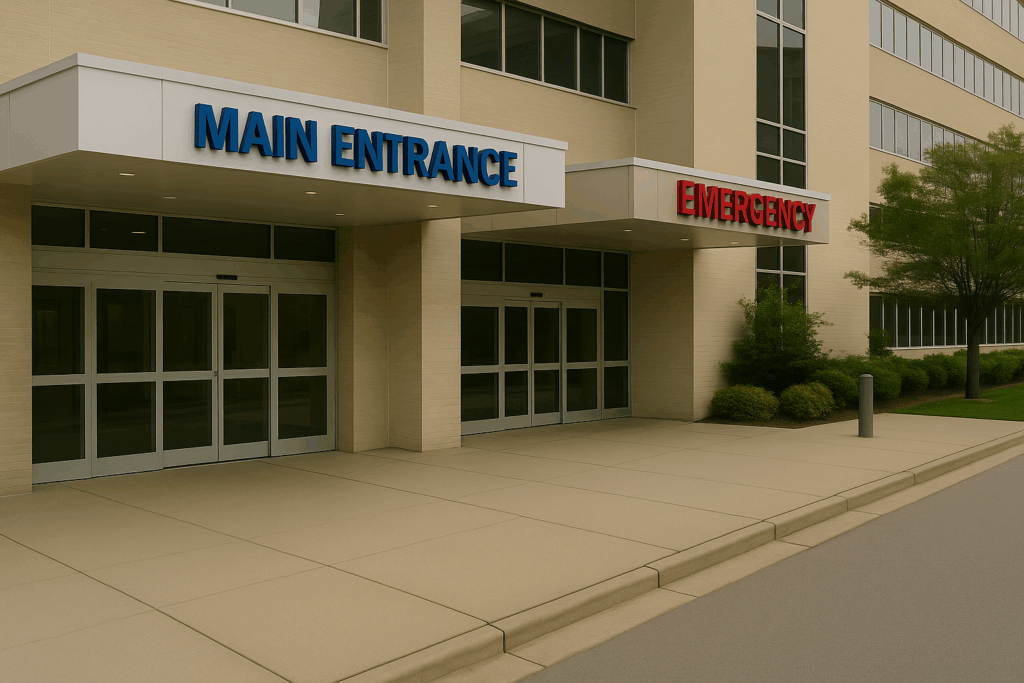
Earlier this year in February, a gunman entered UPMC Memorial Hospital in Pennsylvania, carrying a semi-automatic weapon into the intensive care unit and taking a staff member hostage. Tragically, two people died and more wounded, including three police officers, a doctor, a nurse, and a custodian. That incident shocked the local community and underscored a sobering truth: hospitals today are not immune to the kind of violence once seen only in public spaces.
The issue goes beyond isolated events. According to federal labor statistics, healthcare workers are roughly five times more likely to experience workplace violence than employees in other industries. These incidents take many forms including verbal threats, physical assaults, and in some cases, the presence of weapons. Emergency departments, behavioral health units, and waiting areas remain the most common flashpoints. Staff in these zones often face unpredictable encounters with individuals under extreme stress, pain, grief, or under the influence of substances, creating volatile situations that can escalate in seconds.
Part of the challenge lies in what makes hospitals unique. They are designed to be open, accessible, and responsive around the clock. Patients, families, and visitors enter freely through multiple access points. Visitors, patients, and hospital personnel move constantly through shared corridors. That openness supports the mission of care, but it also makes it difficult to control who enters, how they move, and where they linger. Entry desks, reception counters, and security checkpoints are often the first and only line of defense between the public and sensitive treatment areas.
Administrators and security planners are now rethinking how these spaces are built and staffed. The goal is not to make hospitals feel fortified, but to discreetly layer in protection that keeps staff safer without changing the welcoming nature of care environments. Many hospitals are redesigning reception areas with controlled access points or partial barriers that maintain clear communication while providing a measure of protection. Security officers, who are typically stationed in entryways or parking structures, are being equipped with more secure and functional work areas that allow them to observe and respond safely during tense situations.
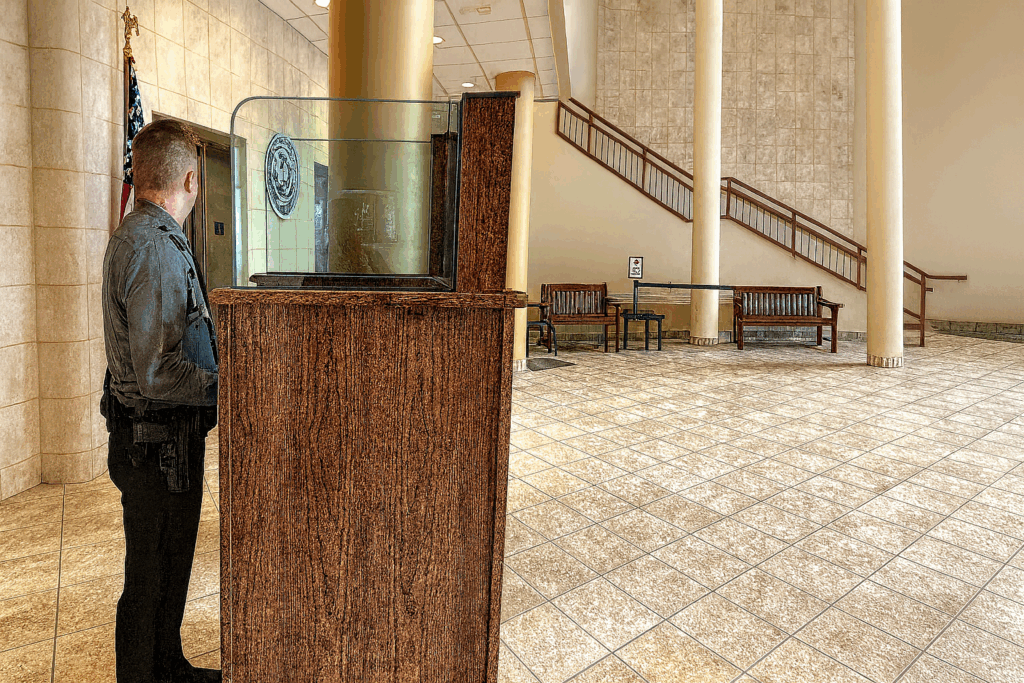
Preparedness is no longer a theoretical exercise; active threat protocols are now standard practice. Many hospitals are now regularly conducting drills to simulate lockdowns or escalation events, and these exercises have revealed how vulnerable large open areas can be to sudden intrusion or chaos. The gap between “normal operation” and “defensible space” has become a primary concern for facility planners and security directors.
Hospitals exist to serve people during moments of vulnerability, but the people providing that care need protection too. When staff feel secure, they can focus entirely on patient care. The presence of protective design elements can communicate that the hospital takes every aspect of care seriously, including the safety of those within its walls. In an era where safety and compassion must coexist, discreet physical protection has quietly become an essential part of caring for those who care for others.